
Zulu Telephone Wire Baskets
The Zulu people of South Africa have long been recognized for their skill in weaving baskets from native grasses and plants, as well as for their intricate and culturally significant beadwork. In the mid-20th century, these traditional weaving techniques were adapted to a new material—recycled telephone wire. The idea is widely believed to have originated with security workers on the night shift at South African factories, who passed the time by winding and weaving brightly colored pieces of discarded telephone wire around their nightsticks. What began as a pastime developed into a distinctive South African craft and an important source of income for many Zulu artisans.
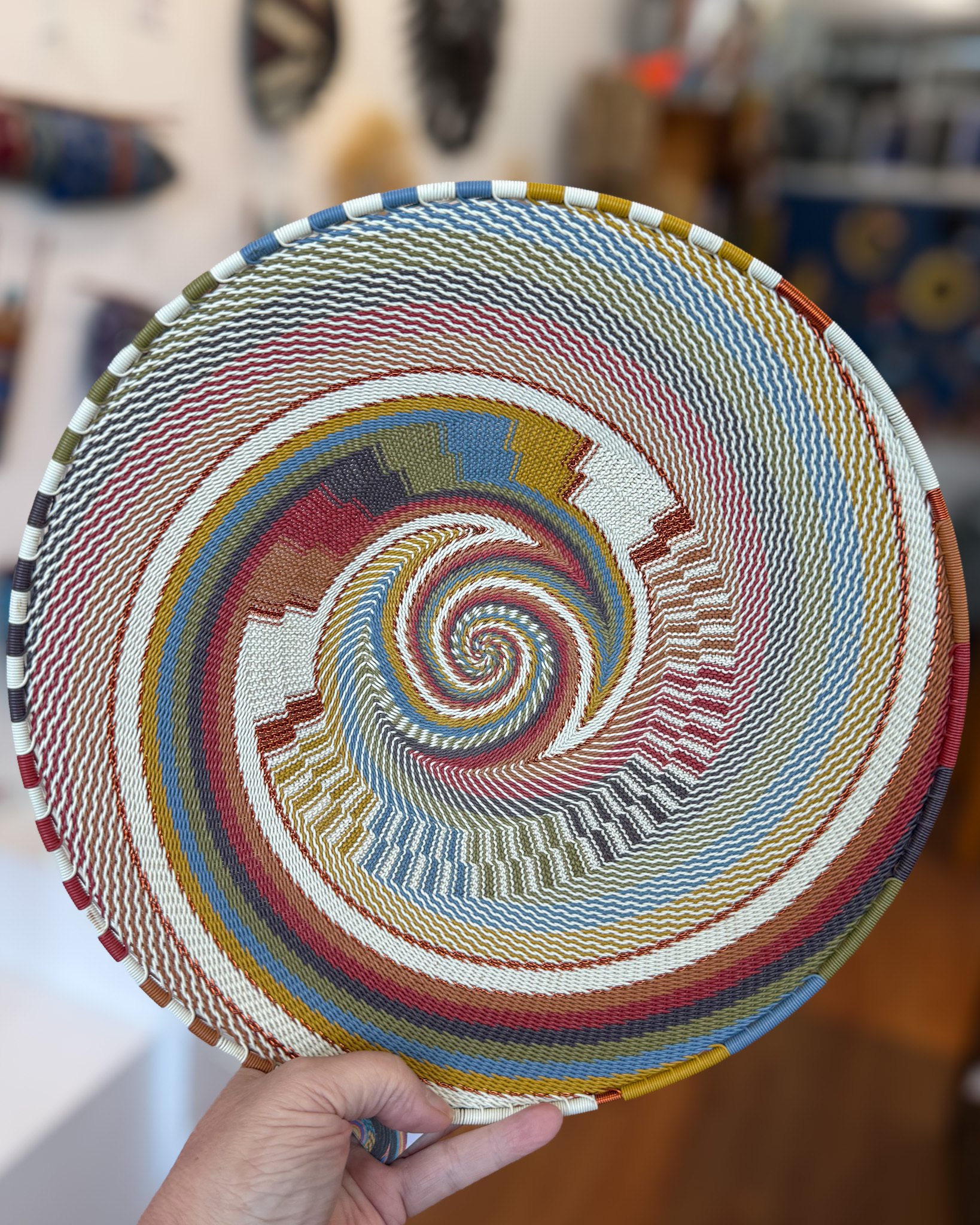
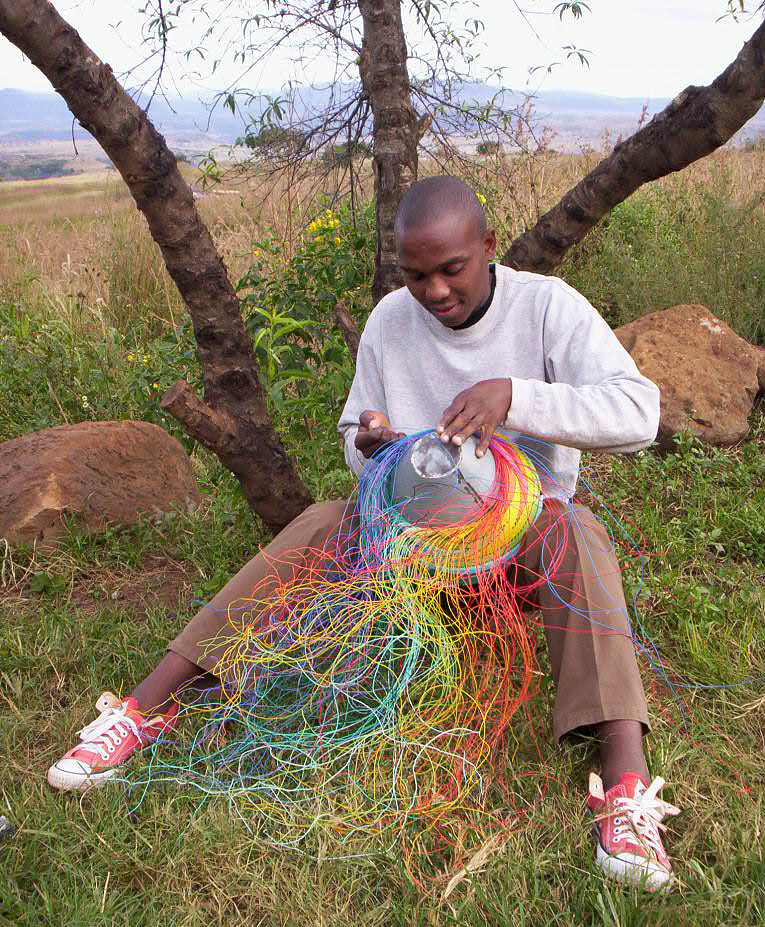
Zulu telephone wire baskets are woven entirely by hand using techniques passed down through generations. Unlike most baskets, which are woven from the bottom up, these baskets are started at the top rim and woven downward over a temporary form. A thick wire forms the rim, and each row is pulled tightly against the mold to create the basket's shape. Once the weaving is complete, the form is removed, leaving a sturdy, self-supporting basket. The group of artisans we work with has also developed several of its own stitches and continues to experiment with new weaving techniques and designs.
There are two main styles of Zulu telephone wire baskets.
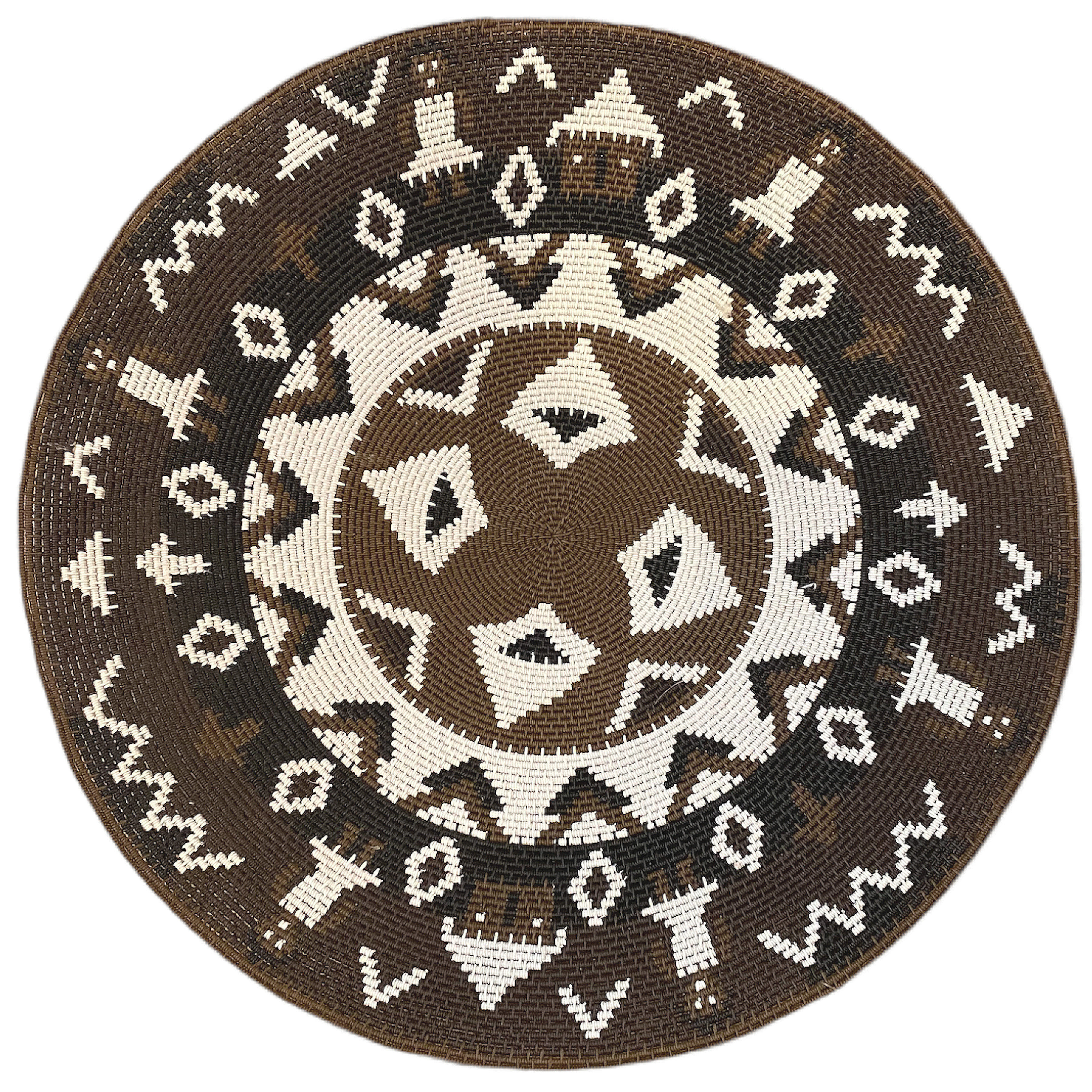
Simple or soft wire baskets are woven with thinner, flexible wire and rely on the weaving itself for their structure. Hard wire tapestry baskets are built over a rigid metal framework that remains inside the finished piece. This allows artisans to create dense, highly detailed designs using thousands of tightly packed stitches. Patterns range from traditional geometric motifs to representational images of animals, people, homes, and scenes from everyday life. Because of the complexity of the weaving, hard wire tapestry baskets generally take much longer to complete.
 Our Zulu telephone wire baskets are produced through Fair Trade organizations and artisan cooperatives that provide fair wages and dependable employment. Purchasing these handmade baskets helps preserve traditional weaving skills while supporting South African artisans and their families. In addition to being decorative, these baskets are exceptionally durable, easy to care for, and can be washed in warm, soapy water, making them practical for everyday use as well as display.
All photos property of Native and cannot be reproduced without permission.